
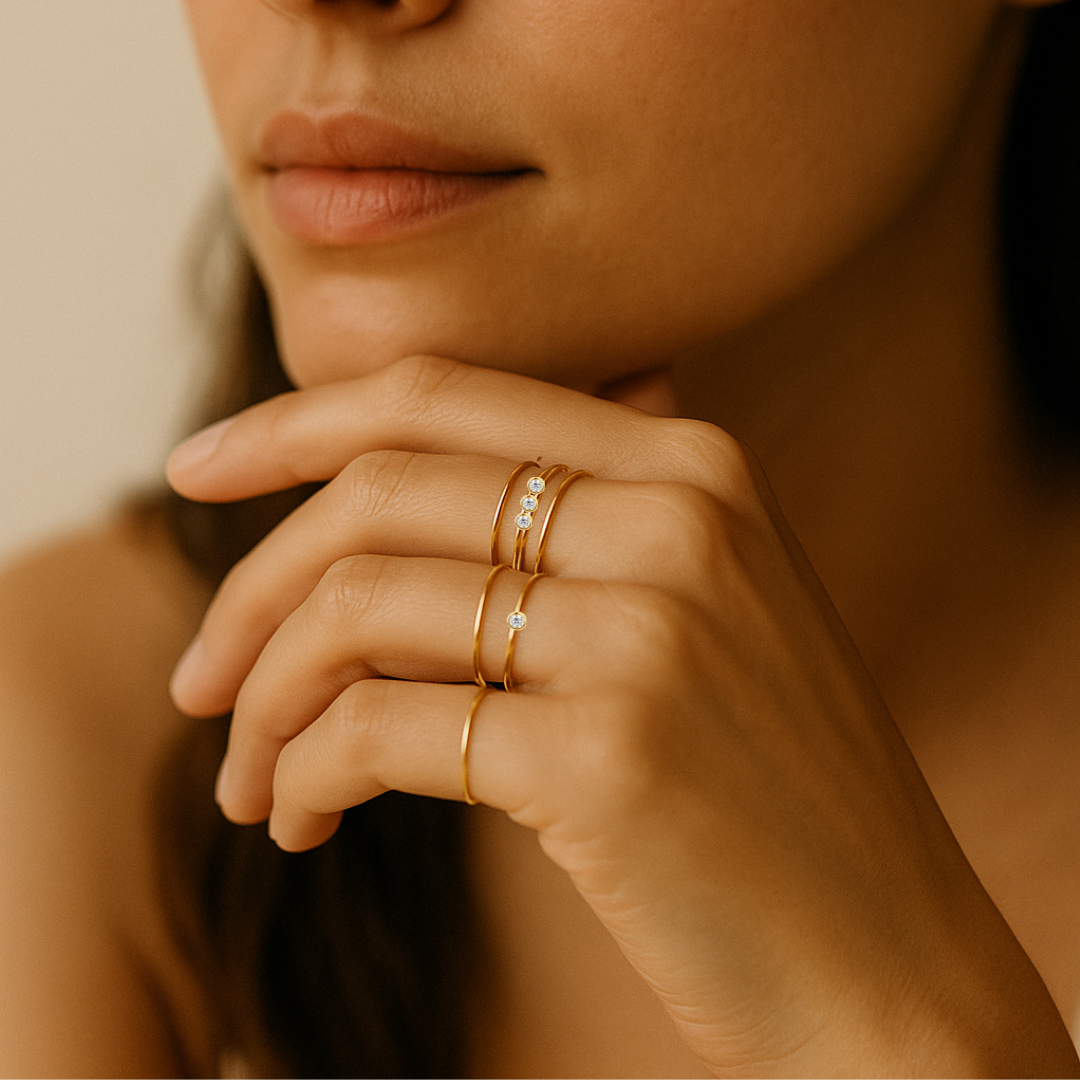
20% off Stacking Rings
Mix & Match!
Enjoy 20% off when you purchase 3+ rings with code STACKTHREE..
STACKTHREE


In the ever-evolving world of jewelry, there is a timeless allure that diamonds possess. Their sparkle, beauty, and enduring symbolism have made them a coveted choice for adornment throughout history. At Le Serey, we are thrilled to unveil our latest collection of dainty diamond necklaces, featuring real lab-grown diamonds—a commitment to our ethics, and sustainability.
The decision to embrace lab-grown diamonds over their mined counterparts was not made lightly. After extensive research and careful consideration, we have taken a bold step forward by eliminating mined diamonds from our collection entirely. This shift aligns with our unwavering dedication to ethical practices and environmental responsibility.
Lab-grown diamonds are created through advanced technological processes that replicate the conditions under which natural diamonds are formed. The result is a stunning gemstone with the same physical, chemical, and optical properties as mined diamonds, but without the environmental and ethical concerns that can be associated with traditional diamond mining.
Still have questions about lab grown diamonds? Read below for helpful insight:
Lab grown diamonds, also known as synthetic or cultured diamonds, are created through advanced technological processes that replicate the natural conditions under which diamonds form in the Earth's mantle. High-pressure, high-temperature (HPHT) and chemical vapor deposition (CVD) methods are commonly employed to create these dazzling gems.
One common misconception is that lab grown diamonds are akin to cubic zirconia—a diamond simulant. However, this couldn't be further from the truth. Lab grown diamonds share the same chemical and physical properties as natural diamonds, consisting of carbon atoms arranged in the crystal lattice structure characteristic of diamonds. They exhibit the same brilliance, hardness, and fire as their mined counterparts.
Ethical concerns surrounding the diamond industry, including issues like conflict diamonds or "blood diamonds," have fueled the demand for more sustainable alternatives. Lab grown diamonds are the ethical answer to these concerns. Being ethically sourced and free from human rights abuses that often occur in mines, lab grown diamonds are the responsible choice for socially conscious consumers who seek a meaningful and sustainable symbol of love and commitment.
One of the most compelling aspects of lab grown diamonds is their affordability. The traditional diamond mining process is resource-intensive and environmentally damaging. In contrast, lab grown diamonds require significantly less energy and leave a smaller ecological footprint. As a result, the production cost of lab grown diamonds is lower, making them more affordable for consumers without compromising on quality.
Advancements in technology have allowed scientists to control and optimize the diamond-growing process, ensuring consistently high-quality gems. Lab grown diamonds often exhibit fewer impurities and inclusions than mined diamonds, leading to stones of exceptional clarity. Additionally, the controlled environment in which they are grown allows for customization, enabling consumers to choose diamonds with specific characteristics, such as color and carat weight, according to their preferences.
Lab grown diamonds are redefining the jewelry industry by offering a sustainable, ethical, and affordable alternative to mined diamonds. As technology continues to advance, the popularity of lab grown diamonds is likely to grow, leading to a more environmentally conscious and socially responsible future for the diamond market. Choosing a lab grown diamond is not just a choice for a beautiful and enduring piece of jewelry; it's a choice for a brighter and more sustainable tomorrow.
Wipe your opal jewelry with a soft, damp cloth after wearing it. Avoid harsh chemicals, prolonged water exposure, and store each piece in a padded jewelry pouch away from direct sunlight and heat.
Yes. Opal jewelry can be worn daily, but it's best to remove it before showering, swimming, exercising, or doing household chores that involve water, chemicals, or impact.
Solid opal can tolerate brief contact with water, but Ethiopian opal, opal doublets, and triplets are much more sensitive to moisture and should be kept as dry as possible.
No. Soap, steam, chlorine, and saltwater can dull the stone, weaken metal settings, and reduce the lifespan of your opal jewelry. Remove your jewelry before bathing or swimming.
Clean opal jewelry using lukewarm water, a drop of mild, fragrance-free soap, and a soft cloth. Rinse gently if needed and dry the piece completely before storing it.
No. Ultrasonic and steam cleaners can crack, cloud, or permanently damage opal. Gentle hand cleaning is always the safest method.
Yes. Prolonged exposure to direct sunlight or extreme heat can dry out the stone and lead to crazing (fine surface cracks). Store opal jewelry in a cool, dry place when not in use.
Yes. Perfumes, lotions, hairsprays, and other cosmetics can leave residue on the stone and reduce its natural brilliance. Apply these products before putting on your jewelry.
With gentle handling and proper maintenance, high-quality opal jewelry can last for generations. Many vintage and antique opal pieces still display their beautiful play-of-color today.
If you're looking for high-quality opal jewelry, Le Serey offers a thoughtfully curated collection of opal rings, necklaces, earrings, and bracelets crafted with premium materials and timeless designs. Each piece is made to showcase the natural beauty of opal while offering lasting elegance for everyday wear and special occasions.
Join our newsletter for exclusive offers, new arrivals, and insider updates.
*By submitting your email, you agree to receiving promotional content. You can unsubscribe at any time. Offer on your first order over $100.