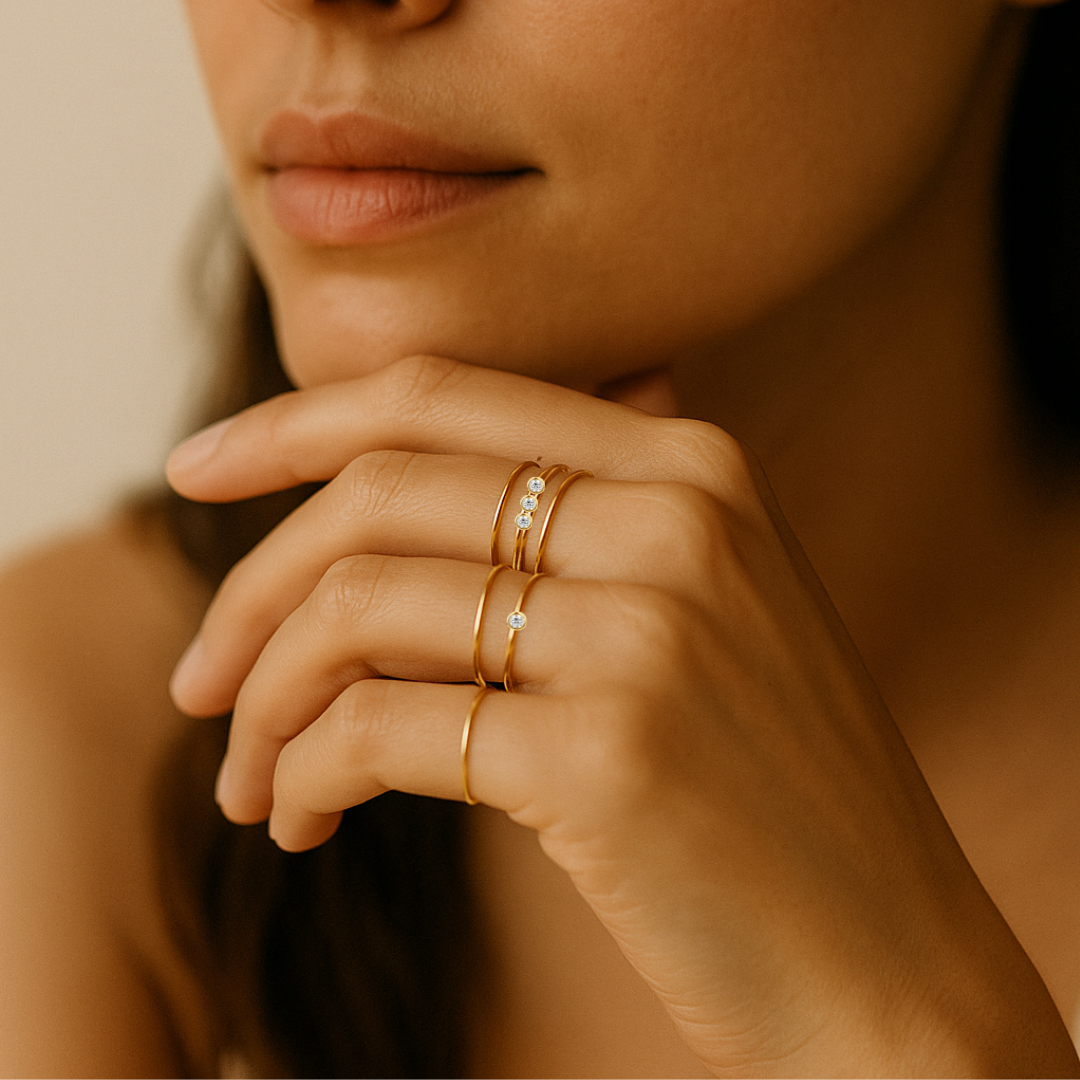
20% off Stacking Rings
Mix & Match!
Enjoy 20% off when you purchase 3+ rings with code STACKTHREE..
STACKTHREE


Remember when wearing a silver ring with gold hoops felt like a fashion mistake? In 2026, it's the look. Mixed-metal jewelry is back in a big way, showing up on runways, in street style, and in the jewelry boxes of people who got tired of choosing sides.
The idea that gold and silver must be worn separately was always more habit than rule. It came from an era when earrings, necklaces, and bracelets were sold as matching sets, and "coordinated" meant identical. Today, most of us build our collections piece by piece over years, and wearing everything together simply makes sense.
There's also a visual reason the look works. Gold is warm and glowing; silver is cool and crisp. Placed side by side, each makes the other look brighter, giving your outfit a depth that one metal alone can't create.
The catch? Mixing well takes a little intention. In this guide, you'll learn the three basic rules, how to layer necklaces, rings, earrings, and bracelets, how to match metals to your outfit and the occasion, and how to build a collection that mixes effortlessly without ever looking mismatched.
There are no strict laws here, but three simple principles separate an intentional mix from an accidental one.
Make one metal the foundation of your look and let the other act as an accent. A rough 70/30 split works well. If you mostly reach for gold, wear gold in most of your pieces and add one or two silver touches. If silver is your everyday favorite, flip it. A perfect 50/50 split often looks undecided, because neither metal is in charge.
A single gold piece alongside a single silver piece can look like you grabbed two things at random. Instead, repeat each tone at least twice in different places. If you wear a silver pendant, echo it with a silver ring or a silver huggie. Repetition tells the eye that the mix is a choice, and it spreads both colors evenly across your look.
Balance heavy pieces with lighter ones. Chunky gold jewelry pairs beautifully with refined silver pieces, and a bold silver cuff looks great next to delicate gold chains. What doesn't work is several statement pieces fighting for attention. Choose one hero piece per look and let everything else support it.
Necklaces are the most visible place to mix metals, so they're worth getting right. Start by giving each chain its own space: stagger lengths about two inches apart, such as 16, 18, and 20 inches, so nothing tangles and each metal can be seen clearly. Varying chain styles helps as well. A smooth box chain, a twisted rope chain, and a beaded satellite chain each catch the light differently, so they read as separate layers even when they sit close together.
A pendant is the easiest way to connect your layers. A two-tone pendant links the chains above and below it, but simple contrast works just as well. A sterling silver Italian horn necklace layered between two gold chains becomes a natural focal point, and the single silver accent stands out precisely because it's surrounded by gold. For a balanced stack, three necklaces is a reliable starting point. Place the most delicate chain closest to your neck, the pendant in the middle, and a slightly bolder chain at the longest length. Keep your dominant metal in two of the three layers and your accent metal in one. If the stack ever feels heavy, remove the middle piece and see whether the look breathes better.
Rings are the easiest way to experiment with mixed metals because you can change your look in seconds. Try the “sandwich” style by placing a silver band between two gold bands, or mix gold and silver across neighboring fingers. You can also combine different textures and widths, such as a hammered gold ring with a smooth silver band, to create more interest. Keep the finishes somewhat similar so the overall look feels balanced and intentional. For a cohesive style, let both metals appear on each hand rather than keeping gold on one hand and silver on the other. If you’re wearing a statement ring, give it some space by keeping the nearby fingers simple and minimal.
Earrings and bracelets frame your face and hands, so they help tie the whole look together. If you have several piercings, your ears are a perfect canvas for mixing. Wear gold earrings in your lobes and add a silver huggie or ear cuff higher up, or start with silver hoops and add tiny gold studs above them. With just one piercing per ear, try a gold stud on one side and a silver stud on the other, then repeat both metals in your necklace so the asymmetry looks planned. Because earrings sit so close to your necklace, let them talk to each other: a mostly gold necklace stack is a great place for a silver earring, while a mostly silver one gets a lift from small gold earrings.
On the wrist, start with one anchor piece, such as a gold bracelet in a paperclip or rope link, then add one or two silver pieces. Three to five bracelets on one wrist is usually the sweet spot. Vary the shapes by mixing chains, bangles, and beaded styles so the stack has movement, and if you wear bracelets on both wrists, repeat your accent metal on each side.
Your clothing can make mixing feel effortless, or it can fight your jewelry. Here's how to use color to your advantage.
White, black, beige, gray, and denim are the easiest backdrops for mixed metals. Black makes both gold and silver pop, while white and beige keep the look soft and fresh. Denim's cool blue flatters silver, and a white tee or tan jacket warms up gold, which makes denim an ideal canvas for an even mix.
Brown, burgundy, red, orange, and cream naturally harmonize with gold. With these shades, let gold lead and keep silver as a small, crisp accent, such as a silver ring or a fine silver chain. That cool flash of silver keeps warm outfits from feeling too heavy.
Blue, green, purple, and cool gray flatter silver. Let silver take the lead and add gold as the warm accent, for example gold earrings or a slim gold bracelet. The touch of warmth adds glow against cool fabrics.
When your clothing is already bold, keep your jewelry simple. Limit the mix to two or three pieces, choose a clear dominant metal, and skip large statement items. Let the print be the star and the metals play a quiet supporting role.
How much you mix depends on where you're going. For everyday and casual outfits, keep it relaxed: small hoops, a pair of layered chains, and a couple of stacking rings in both tones are pieces you can wear all day without a second thought. At the office, aim to be polished and quiet with one dominant metal, one accent, and three or four clean-lined pieces in total, such as small studs, a fine chain, a slim bracelet, and a simple band.
Weddings and special occasions call for a little more shine. With traditional or festive outfits featuring rich fabrics and embroidery, let gold lead and use silver or a two-tone piece as a modern accent. With a classic evening dress, a mixed-metal necklace stack or two-tone drop earrings add an elevated finish. On date nights, draw attention to your face with layered necklaces and statement earrings while keeping your wrists and hands lighter. Evening light flatters both metals, so it's a great moment to try a bolder mix.
Need a starting point? These seven combinations cover everything from quiet everyday looks to bold fashion statements. Use the table to pick one that suits your style and plans.
| Styling Idea | How to Wear It | Best For |
|---|---|---|
| Gold chain + silver pendant | Hang a silver pendant on a simple gold chain so the pendant becomes the focal point while the chain keeps the look warm. | Everyday wear, first-time mixers |
| Silver hoops + gold layered necklaces | Wear bright silver hoops near your face and build warmth below with two or three gold necklaces. Add a silver ring to repeat the accent. | Casual days, weekends |
| Gold watch + silver bracelets | Stack two or three slim silver bracelets beside a gold watch for a contrast between solid and delicate. | Office, everyday |
| Mixed-metal ring stacks | Combine thin gold bands, a textured silver ring, and one stone ring, using the "sandwich" on at least one finger. | Everyday, brunch, travel |
| Gold and silver bangles together | Alternate gold and silver bangles of the same width on one wrist to create rhythm without clutter. | Weekends, festive occasions |
| Minimal two-tone jewelry | Wear a single two-tone ring or a fine chain with gold and silver links for the quietest version of the trend. | Office, minimalist wardrobes |
| Intentional "metal clash" | Pair chunky gold and chunky silver at the same scale, such as a thick gold chain with a bold silver cuff, and keep the outfit simple. | Fashion-forward looks, evenings out |
The common thread in every idea is balance. Each combination either lets one metal clearly lead or matches both metals in scale, so the contrast reads as a choice rather than an accident. Once one of these looks feels comfortable, try swapping the dominant metal to see how the mood changes.
There are no strict rules for combining gold and silver anymore. What matters is that your mix of metals looks intentional rather than accidental, and that comes down to four simple habits: balance, repetition, proportion, and personal style. Choose a dominant metal and let the other support it. Repeat each tone at least twice so the eye can connect them. Keep heavy and delicate pieces in balance, and avoid wearing several statement pieces at once. Above all, wear what feels like you. Your skin tone, wardrobe, and lifestyle are better guides than any trend report.
The best part of this trend is that it rewards what you already own. Before buying anything new, open your jewelry box and rediscover the pieces you've been keeping apart. Try this tonight: put on your three most-worn gold pieces, then add one silver ring and one silver chain, such as a sterling silver stacking ring and chain from Le Serey. Check the mirror, adjust until it feels balanced, and wear it out tomorrow. That's your mixed-metal starting point for 2026.
Choose one dominant metal for most of your look, use the other as an accent, and repeat each metal in at least two places. Keep proportions balanced and limit yourself to one statement piece.
Both. Gold remains a favorite for its warmth, silver is popular for its modern feel, and wearing them together is one of the defining jewelry trends of 2026.
Yes. Everyday mixed-metal looks work best when they're simple: small hoops, a pair of layered chains, and a couple of stacking rings in both tones.
Yes. For weddings and special occasions, let one metal lead, add the other as a refined accent, and consider a two-tone piece to tie the look together.
A two-tone "bridge" piece, such as a watch, ring, or pendant that contains both metals. It makes every other gold and silver piece you add look intentional.
Yes. Gold filled jewelry keeps its gold color through daily wear, so it stays true next to sterling silver. Pieces available in both metals, like an Italian horn necklace from Le Serey, make pairing especially easy.
Join our newsletter for exclusive offers, new arrivals, and insider updates.
*By submitting your email, you agree to receiving promotional content. You can unsubscribe at any time. Offer on your first order over $100.