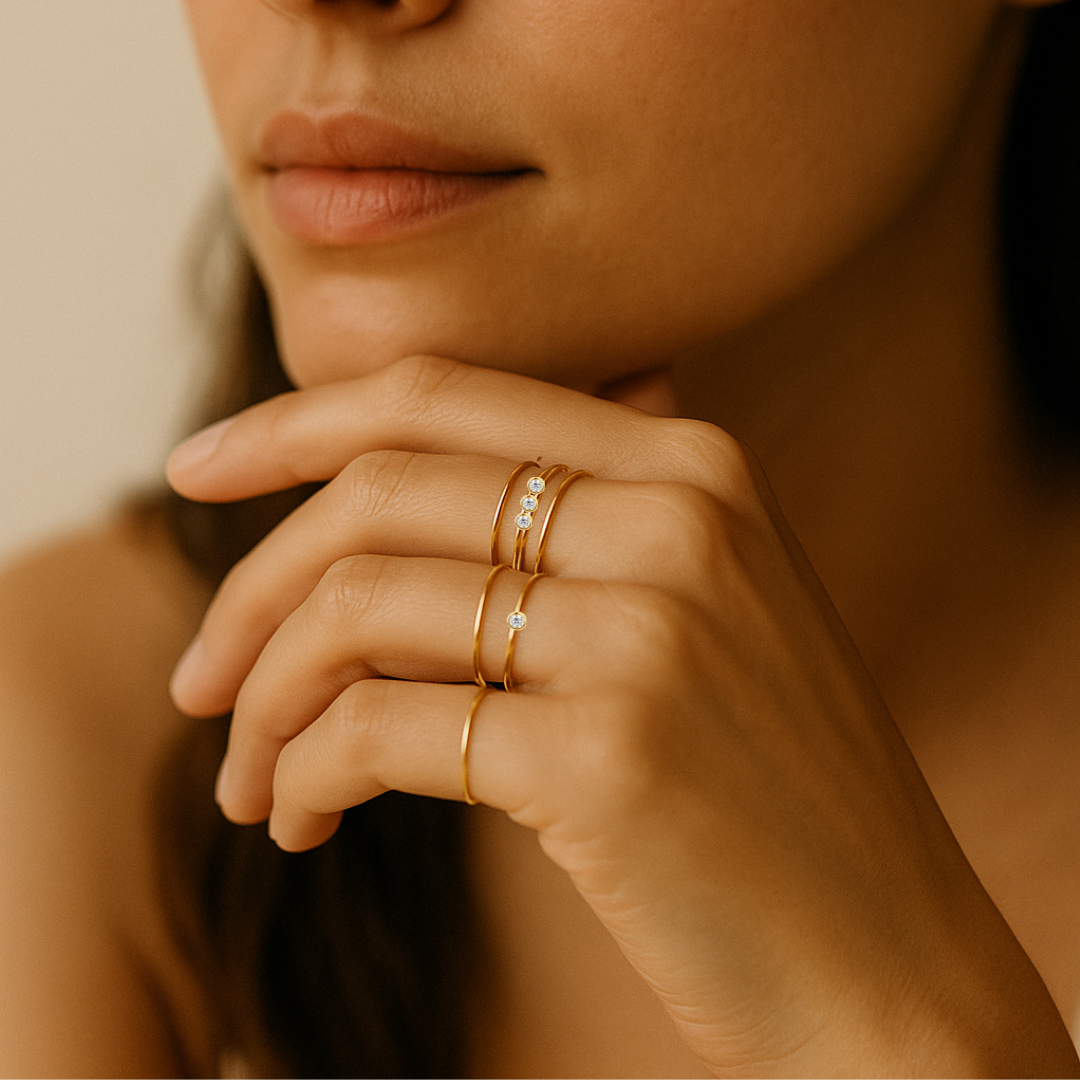
20% off Stacking Rings
Mix & Match!
Enjoy 20% off when you purchase 3+ rings with code STACKTHREE..
STACKTHREE


Few materials captivate the eye quite like opal and opalite. Both shimmer with an opalescent glow, both are widely used in jewelry, and both are often confused with one another. If you’ve ever wondered opal jewelry vs opalite jewelry—what’s the difference, which is real, and how to tell the difference—you’re in the right place.
This article is worth reading because it goes beyond surface-level comparisons. You’ll learn how opalite and opal form, why they look similar, what truly separates a natural gemstone from an imitation, and how to confidently choose between them—whether for jewelry, collecting, or crystal meaning. By the end, you’ll be able to spot the differences between opalite and opal with ease.
Opalite is widely known for its soft glow and dreamy, ethereal look. It often appears milky blue or pearly white in normal light and shifts to warm orange or amber tones when held up to light. This eye-catching quality makes opalite a favorite in jewelry supplies and decorative pieces.
Despite its popularity, opalite is not a natural stone in the traditional sense. It is called opalite in the market, but the name opalite is a trade name rather than a geological classification. Many people assume it is related to opal, but opalite is actually a type of man-made glass designed to mimic the opalescent appearance of opal-like materials.
Because it is affordable, consistent in color, and durable, opalite is commonly used in gemstone beads, carvings, and even a simple bracelet. Its uniform appearance is often the first clue that it is not a genuine gemstone formed by nature.
Opal is a naturally occurring gemstone prized for its luminous beauty and rarity. Unlike crystalline gemstones such as quartz, opal is classified as a mineraloid, meaning it lacks a regular crystal structure. It is composed of hydrated silica, formed over millions of years as silica-rich water seeps into rock crevices.
What gives opal its magic is its internal structure of microscopic silica spheres. These spheres diffract light, which gives opal its famous play of color—a dynamic play of flashes that can include red, green, blue, and violet. This phenomenon, also called play-of-color, is unique to opal.
Each opal is truly one of a kind, shaped by its geological history and natural formation. From common opal to precious opal, every variety reflects a geological wonder that cannot be replicated by man made processes.
One of the most common questions is whether opalite is natural or synthetic. The clear answer is that opalite is a man-made material. More specifically, opalite is a man-made glass created to imitate the glow of opal.
This man-made process often involves glass mixed with additives such as resin to create an opalescent effect. While beautiful, opalite lacks the internal structure found in opal and does not contain silica spheres arranged by nature.
Because it is man made, opalite does not have a geological origin, nor does it form in the earth. This is why opalite is best described as an imitation, not a natural gemstone, even though it is often sold alongside other gemstones.
Australian opal is considered the gold standard of opals worldwide. In fact, Australia produces the majority of the world’s high-quality opal, including the rare and highly sought-after black opals.
Regions like Lightning Ridge are famous for producing precious opal with deep body color and vivid flashes. The darker background enhances the play of color, making these stones exceptionally valuable and sought-after.
The value of Australian opal also comes from its stability, brightness, and natural beauty. Each stone reflects a long geological history, making it not just jewelry, but a piece of Earth’s story with lasting value.
The term natural opalite is misleading. While you may see sellers use this phrase, true natural opalite does not exist in mineralogy. Historically, the name opalite was once loosely applied to certain materials like dolomite or sea opal, but these are not the same as modern opalite.
Today, when people refer to opalite, they are almost always referring to man-made opalite. This confusion is one reason people struggle with what’s the difference between opal and opalite.
Understanding this distinction is crucial if you want a genuine gemstone rather than a decorative glass material.
The key differences between opalite and opal come down to origin, structure, and value. Opal is a natural stone formed through geological processes, while opalite is manufactured.
Opal has inclusions, color variations, and natural imperfections that reveal its authenticity. Opalite, by contrast, is smooth, uniform, and lacks internal variation. These differences between the two become obvious once you know what to look for.
From a collector’s perspective, opal offers rarity and a deep connection to nature, while opalite offers affordability and consistency.
When comparing opalite vs opal, appearance is often the first giveaway. Opalite tends to have a translucent appearance with a uniform milky blue glow. Opal, however, may be translucent or opaque and shows complex flashes of color.
Structurally, opal has a unique internal structure formed by silica spheres arranged in a natural sphere pattern. Opalite lacks this structure entirely, which is why it does not display true play of color.
These major differences also affect hardness. On the Mohs scale, opal typically ranks between 5.5 and 6.5 in hardness, while opalite glass can vary but is generally more resistant to cracking due to its uniform composition.
Both materials are used in jewelry, but for very different reasons. Opalite jewelry is popular because it is affordable, durable, and visually consistent. It works well in mass-produced designs and gemstone beads.
Opal, on the other hand, is used in fine jewelry and heirloom pieces. A genuine opal requires careful setting due to its relative softness, but its ethereal beauty and rarity make it worth the care.
If you’re looking for everyday wear without worry about cracking or chipping, opalite is the best choice. If you want a natural gemstone with lasting value, opal is the clear winner — and you’ll find both styles in our opal jewelry collection.
To tell the difference quickly, look for these signs. Opalite has a uniform glow and changes color dramatically under light, often appearing orange at the edges. Opal shows irregular flashes and color patterns.
Temperature is another clue. Opal often feels cooler to the touch, while glass opalite warms quickly in your hand. Additionally, opal may show tiny inclusions or color zoning, while opalite appears flawless.
Once you know these markers, opal vs opalite becomes much easier to identify.
Choosing between the two depends on your priorities. If authenticity, rarity, and long-term value matter, choose natural opal. It offers a true connection to nature and is a genuine gemstone formed over time.
If affordability, durability, and aesthetic consistency are more important, opalite may be the better choice. It delivers an opalescent look without the price tag.
There is no wrong answer—only an informed one when deciding between opalite jewelry or natural opal.
In metaphysical and crystal healing traditions, both stones are associated with emotional balance. Opal is often linked to creativity, intuition, and a deep connection to nature.
Opalite, while man made, is commonly associated with calm energy, communication, and self-love. Its smooth, glowing appearance gives it a soothing, ethereal quality that many people enjoy.
Whether you prefer the natural power of opal or the symbolic calm of opalite, both can hold personal meaning depending on your intention.
Understanding opal vs opalite empowers you to appreciate both for what they truly are—beautiful materials with very different origins and value.
Wipe your opal jewelry with a soft, damp cloth after wearing it. Avoid harsh chemicals, prolonged water exposure, and store each piece in a padded jewelry pouch away from direct sunlight and heat.
Yes. Opal jewelry can be worn daily, but it's best to remove it before showering, swimming, exercising, or doing household chores that involve water, chemicals, or impact.
Solid opal can tolerate brief contact with water, but Ethiopian opal, opal doublets, and triplets are much more sensitive to moisture and should be kept as dry as possible.
No. Soap, steam, chlorine, and saltwater can dull the stone, weaken metal settings, and reduce the lifespan of your opal jewelry. Remove your jewelry before bathing or swimming.
Clean opal jewelry using lukewarm water, a drop of mild, fragrance-free soap, and a soft cloth. Rinse gently if needed and dry the piece completely before storing it.
No. Ultrasonic and steam cleaners can crack, cloud, or permanently damage opal. Gentle hand cleaning is always the safest method.
Yes. Prolonged exposure to direct sunlight or extreme heat can dry out the stone and lead to crazing (fine surface cracks). Store opal jewelry in a cool, dry place when not in use.
Yes. Perfumes, lotions, hairsprays, and other cosmetics can leave residue on the stone and reduce its natural brilliance. Apply these products before putting on your jewelry.
With gentle handling and proper maintenance, high-quality opal jewelry can last for generations. Many vintage and antique opal pieces still display their beautiful play-of-color today.
If you're looking for high-quality opal jewelry, Le Serey offers a thoughtfully curated collection of opal rings, necklaces, earrings, and bracelets crafted with premium materials and timeless designs. Each piece is made to showcase the natural beauty of opal while offering lasting elegance for everyday wear and special occasions.
Join our newsletter for exclusive offers, new arrivals, and insider updates.
*By submitting your email, you agree to receiving promotional content. You can unsubscribe at any time. Offer on your first order over $100.