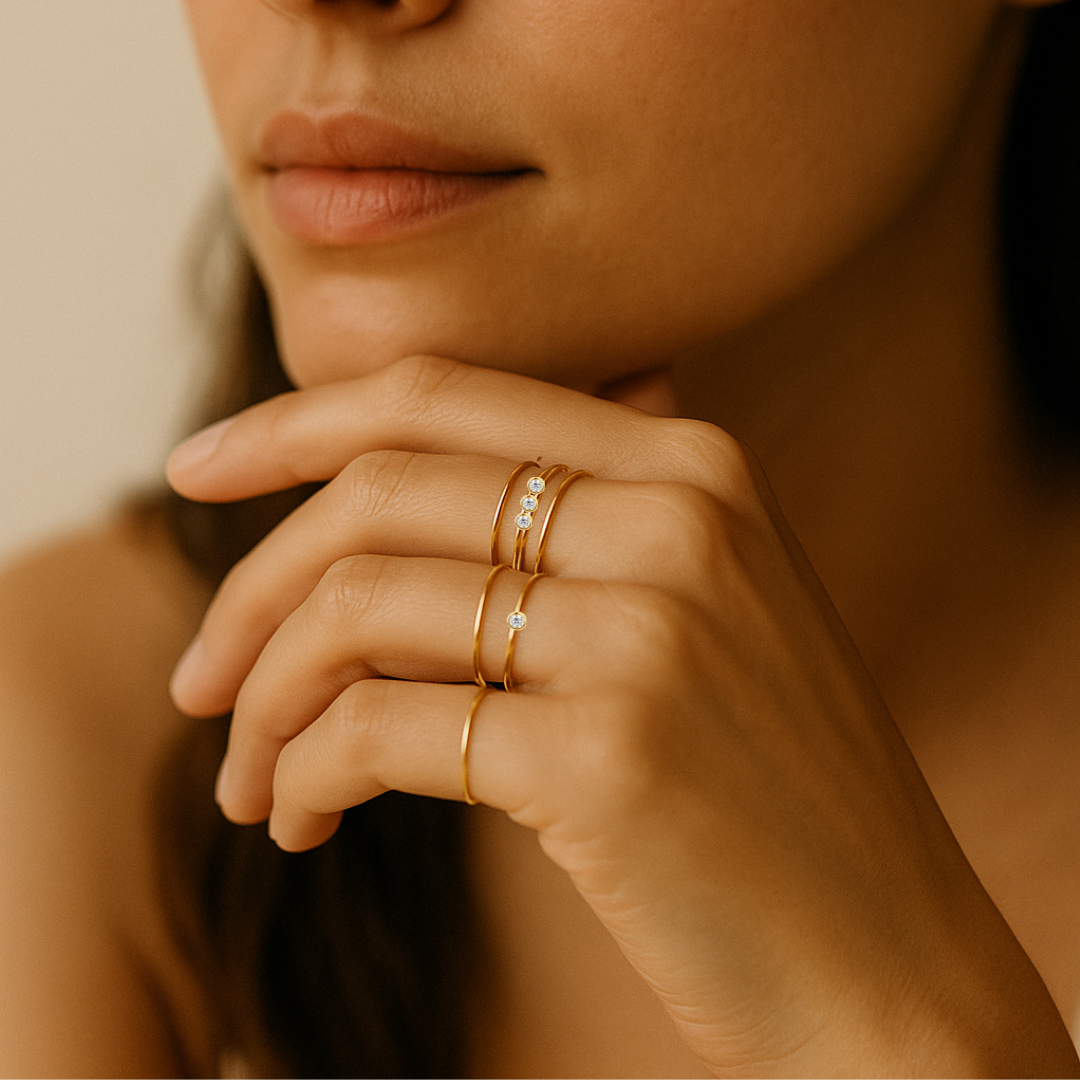
20% off Stacking Rings
Mix & Match!
Enjoy 20% off when you purchase 3+ rings with code STACKTHREE..
STACKTHREE


You open your jewelry box because you're already late, only to find three necklaces knotted together, an earring missing its pair, and your favorite chain buried underneath everything else.
Sound familiar?
Learning how to store jewelry properly is about more than making your collection look neat. The right storage setup can help reduce tangling, scratches, friction, moisture exposure, tarnishing, and the everyday wear that happens when pieces are tossed together.
The good news? You don't need an expensive jewelry cabinet or a huge dressing room. A few simple habits—separating pieces, securing chains, keeping jewelry dry, and giving delicate items their own space—can make a noticeable difference.
Here’s how to create a jewelry storage system that actually works.
Jewelry can be surprisingly easy to damage when it is stored carelessly. Chains knot together, earrings disappear into drawers, rings rub against one another, and moisture can contribute to tarnishing.
Proper jewelry storage helps you:
If you're wondering how to store jewelry at home, the basic rule is simple: keep it separated, clean, dry, and protected. A little organization can make your jewelry easier to find and keep your favorite pieces ready to wear.
Choose a dry spot, not a damp one. Keep your jewelry away from bathroom humidity and moisture when you're not wearing it.
Good necklace storage is less about having a fancy organizer and more about keeping each chain separate. You can use hooks, compartments, pouches, or even a few simple household items to keep necklaces from crossing and knotting.
Avoid keeping multiple necklaces in one loose pile. Give each chain its own hook, compartment, pouch, or small bag.
Practical ways to do it:
Before putting a necklace away, fasten the clasp and lay the chain straight. This helps prevent the loose chain from forming loops that can catch around other jewelry.
If you're using a pouch or bag, avoid bunching the chain inside.
Fine chains can easily catch around chunky necklaces or large pendants. Store delicate pieces separately to reduce the chances of knots and unnecessary friction.
If you don't have enough compartments, use individual pouches or resealable bags as a simple alternative.
It may be tempting to drop all your necklaces into one box at the end of the day, but that's when tangles start.
Take a few seconds to return each necklace to its own hook, compartment, or pouch. That small habit can save you much more time later.
Giving every chain its own space is one of the simplest ways to prevent knots. If you have a layered necklace collection, storing pieces by length can also make your morning routine easier. Le Serey's guide to choosing the right necklace length explains common necklace lengths and how they work together.
Different pieces need slightly different storage. A necklace can tangle in seconds, while a pair of earrings can disappear in a drawer. Instead of storing everything the same way, give each type a setup that keeps it protected and easy to find.
Keep necklaces separate so the chains cannot cross or knot. Hang them individually on hooks, or lay them flat in separate compartments. For delicate chains, a soft pouch or individual bag can provide an extra layer of separation.
Bracelets can usually be laid flat in a lined compartment or soft pouch. Avoid piling several bracelets together, especially if some have charms, chains, or textured details that can catch on one another.
A divided jewelry tray or ring slot makes rings easy to organize. Give pieces with stones or raised details their own space so they don't constantly rub against other jewelry.
Keep earrings together as pairs. Small compartments work well for studs and smaller earrings, while larger earrings can be stored in separate sections so they don't get tangled or scratched.
Delicate jewelry deserves a little extra care. Store fine chains and lightweight pieces separately in a soft pouch or lined compartment. Keep them away from heavier jewelry, sharp edges, and anything that could catch on the chain.
Your storage doesn't need to be fancy. Even simple pouches, drawer dividers, and separate compartments can make a big difference.
Gold filled jewelry is designed for regular wear, but proper storage is still part of good jewelry care. Keep gold filled pieces dry, wipe them after wearing, and store them separately in a soft pouch or lined compartment away from humidity, perfume, lotion, and unnecessary friction.
Le Serey explains that gold filled jewelry contains a substantial layer of real gold bonded to a base metal, which distinguishes it from standard gold plating. (Le Serey)
For storage, focus on simple habits:
Le Serey's guide on whether gold filled jewelry tarnishes goes into more detail about moisture, beauty products, storage, and everyday care.
For a deeper explanation of the material itself, Gold Filled Jewelry 101 covers what gold filled means and how it differs from gold plated jewelry.
A quick rule of thumb:
| Don't store together | Better approach |
|---|---|
| Necklace + necklace | Separate compartments or hooks |
| Delicate chain + heavy chain | Give each its own space |
| Pendant + loose chains | Separate the pendant necklace |
| Jewelry + perfume | Store separately |
| Damp jewelry + storage | Dry it completely first |
| Multiple pieces in one loose pile | Use individual sections |
| Earrings without their backs | Keep each pair together |
The goal isn't to create a complicated system for every individual piece. It's simply to prevent unnecessary contact, crossing, moisture, and friction.
You don't need to spend an hour maintaining your collection. A five-minute routine is enough to keep storage under control.
Good storage doesn't require special equipment — just a repeatable habit:
Jewelry built with genuinely durable materials makes this routine even more forgiving — gold filled jewelry with a verified, properly thick gold layer will hold up to small lapses in a storage routine far better than thin plated pieces will, simply because there's more real gold standing between the base metal and the air.
If you're reading this with a knot already in hand, don't pull. Pulling tightens the knot and can stretch or break fine links.
Instead, lay the chain flat on a smooth surface, unfasten the clasp, and use a pin or needle to gently loosen the center of the knot, working from the outside in. A drop of baby oil or a dusting of baby powder can reduce friction and help the links slide apart. Be patient; most knots come out in a few minutes once the tension is off.
For a step-by-step walkthrough, including what to do with the stubborn ones, see Le Serey's guide on how to untangle a necklace without damaging the chain
The best way to store jewelry doesn't have to be complicated.
Separate it. Keep it dry. Protect delicate pieces. Store necklaces so they cannot cross and knot. Give your everyday jewelry a consistent home.
Those small habits can make getting ready easier while helping you take better care of the pieces you already love.
And when you're ready to add another everyday favorite to your collection, explore Le Serey's jewelry collections for necklaces, rings, earrings, bracelets, and layering pieces designed to be worn and enjoyed again and again.
The best way to store jewelry is to keep pieces clean, dry, separated, and protected from unnecessary friction. Use individual compartments, soft pouches, lined trays, or hooks depending on the jewelry type, and keep the storage area cool and dry.
Store each necklace separately, fasten the clasp, and either hang it individually or lay it flat in its own compartment. Avoid putting multiple loose chains into the same pouch or jewelry-box section.
Either can work. Hanging is especially useful for keeping individual chains separated, while laying necklaces flat works well when each chain has its own compartment. The important thing is preventing chains from crossing and mixing together.
Both can work. A lined jewelry box is useful for organizing multiple pieces, while an individual soft pouch provides simple separation and protection. Choose based on the jewelry you own and the space available.
Keep jewelry clean and completely dry before storage, limit exposure to humidity and air when practical, and store pieces in a dry area away from perfume and other beauty products. Individual pouches or lined compartments can also help protect pieces.
It's better not to store everything loose together. Different pieces can catch, scratch, or tangle with one another. Separate necklaces from delicate chains, keep pairs of earrings together, and give pieces with stones or pendants appropriate individual space.
A cool, dry drawer, jewelry box, closet shelf, or dresser is generally preferable to a humid bathroom. Choose a location away from direct sunlight, moisture, and frequent exposure to beauty products.
Use a compact travel jewelry case with separate compartments. Secure necklace clasps, separate delicate chains, keep earrings paired, and keep jewelry away from toiletries and liquids.
Store each delicate necklace separately in a soft pouch, lined compartment, or individual hook. Fasten the clasp before storing and keep fine chains away from heavier necklaces and pendants.
Good everyday habits matter: remove jewelry when appropriate, wipe it after wearing, keep it away from unnecessary exposure to moisture and chemicals, and store each piece clean, dry, and separated.
Join our newsletter for exclusive offers, new arrivals, and insider updates.
*By submitting your email, you agree to receiving promotional content. You can unsubscribe at any time. Offer on your first order over $100.